

How Much Bigger Are Half Sizes in Shoes?
31 July 2026
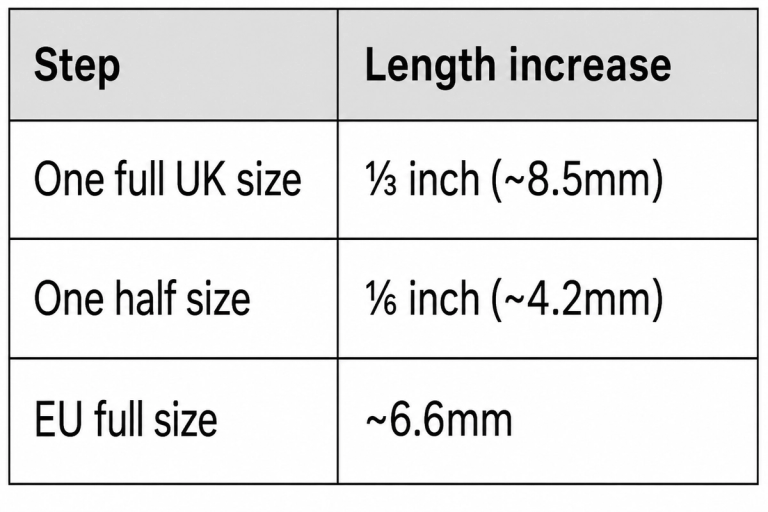
Short answer: a half size is about one-sixth of an inch, or 4.2mm. If this seems like a random amount, the historical context is helpful - more on that shortly.
While half sizes may sound small, they can make a massive difference to how comfortable and well-fitting your shoes are. Rubbing or slipping can be put to bed just by going up or down a shoe size, for example.
In this post, we’ll introduce half shoe sizes in more detail and point you in the right direction for resolving shoes that are too tight or too loose. Here’s what we’ll cover:
- What a half size actually is
- How much bigger half sizes are
- Why half sizes exist
- How to choose between a full and half size
- Common mistakes to avoid
What is a Half Size in Shoes?
As you might have guessed, a half size sits in between two full sizes. 6.5 is the half size between 6 and 7.
In the UK and US, shoe sizes are built on the length of the shoe’s “last” - the foot-shaped mould that shoemakers traditionally used to make shoes. Lasts increased in size by one third of an inch, which carried over to the size of the shoes made with the last. And to delve even deeper into the historic context: this one-third inch derives from a “barleycorn” - a unit of measurement equalling the length of three barleycorns laid end to end.
A half size splits this third inch in half, giving one sixth of an inch.
Note that the measurement system changes with EU shoe sizes. These sizes are based on centimetres and don’t map as cleanly to half sizes.

How Much Bigger Are Half Sizes?
Half sizes are about ⅙ of an inch different in size than the nearest full size. Half sizes may be slightly wider, but the main functional difference is in length.
This handy table shows the increase in length between sizes and half sizes:
Why Half Sizes Exist
The answer to this question is as simple as feet not coming in convenient full-size increments. Many people’s feet sit somewhere between formalised shoe sizes, and while some of these people can make do with a shoe that’s a little snug or a little loose, others prefer a neater fit.
If you feel pinching, slipping or other discomfort with your shoes, you might benefit from going a half size up or down. Doing so can lead to more comfort, better gait, and long-term foot health. Other symptoms you might want to look out for that can be alleviated by a better-fitting shoe:
- Heel slippage
- Blisters
- Rubbing
- Pinching

How to Choose Between a Full Size and Half Size?
If you find yourself between sizes, here’s how to decide whether to make the change:
- Consider the time of day: feet swell throughout the day; try on the new size at the end of the day when your feet are at their largest to ensure an accurate fit
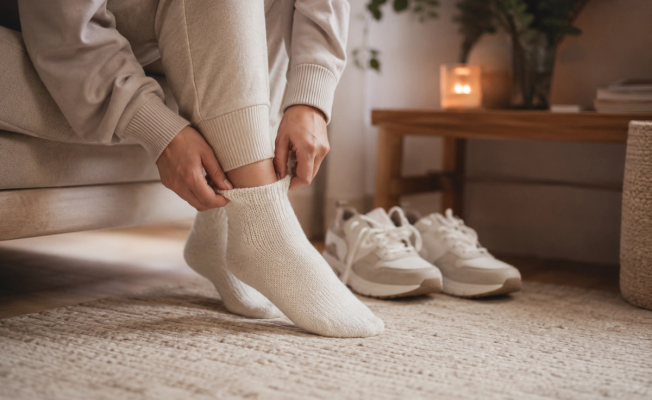
- Account for your socks: when trying on shoes, wear the socks or tights you’re most likely to wear day-to-day
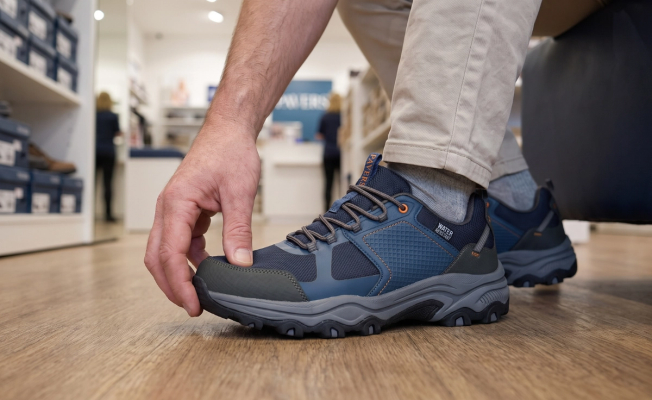
- Check toe room: you want about a thumb’s width between your longest toe and the end of your shoe
- Take into account the material: leather and some other materials stretch and mould as you wear them, whereas synthetics are less likely to do so
- When in doubt, size up: you can adjust a too-roomy shoe with insoles, thicker socks, and other hacks. Shoes that are too small can’t as easily be made bigger.
Common Mistakes with Half Sizes
We couldn’t go without sharing some easy-to-make mistakes when choosing half-size shoes with you:
- Don’t assume a half size changes width: while there may be a small increase, half sizes primarily extend length. Wide fit shoes are your best port of call if you’re looking for more room in the toe box.
- Don’t assume all brands are identical: sizing and half sizes vary between brands, so check each brand’s size guide before buying anything.
- Re-measure your feet over time: feet change shape with age, weight, pregnancy, and other factors - a size that fitted you years ago may not do so now.
- Don’t ignore the bigger foot: most of us have one foot slightly larger than the other; always fit your shoes to this bigger foot.
- Don’t go for a half size if a full size would be better: if your shoes are really tight or loose, it may be that a full-size change is needed.
- Don’t rely only on conversion charts: if you’re not 100% sure, always try your shoes on before committing to the purchase.
Take Your Next Step with Pavers Shoes
To recap: a half size in the UK is about a sixth of an inch or, in old terms, about three barleycorns. Sizing up or down half a size can give you more comfortable shoes and improve long-term foot health. Symptoms to look out for include rubbing, blisters, pinching, or heel slippage.
And always remember the right fit is about more than one factor. A longer or shorter shoe may help, but the best way to find the right-sized shoe for your foot is to try them on. Pop into one of our stores, and we’ll be happy to pair you with the perfect set.