
The Best Shoes for Hallux Rigidus
14 August 2026
The hallmark symptoms of Hallux Rigidus are stiffness and pain at the base of your big toe, difficulty pushing off when walking, and a bony bump on the top of the joint that can snag on shoes. This is the most common type of arthritis in feet, but thankfully it’s one where the right footwear can make a genuine difference to your day-to-day symptoms.
In this guide, we’ll explore Hallux Rigidus, what to look for when choosing shoes to manage symptoms of the condition, and the potential benefits on offer. Here’s what we’ll cover:
- What is Hallux Rigidus?
- What to look for in shoes for Hallux Rigidus
- Tips for buying shoes for Hallux Rigidus
What is Hallux Rigidus?
Hallux Rigidus is a form of degenerative arthritis that affects the first metatarsophalangeal (MTP) joint at the base of your big toe. The name of the condition translates to ‘stiff big toe’, which is a fitting name.
As cartilage in the MTP joint wears down, it can stiffen and lose its range of motion. This is particularly noticeable in the movement required to push off when you take a step (scientific name: dorsiflexion).
The condition often starts as Hallux Limitus (partial stiffness) before developing fully into Hallux Rigidus. Common causes are wear and tear over time, toe injury, overpronation, a long first metatarsal, and family history.
Knowing the symptoms is helpful whether you are diagnosed with Hallux Rigidus or suspect you might have it. They are:
- Pain and stiffness in the big toe, worse in damp or cold weather
- Difficulty bending your big toe upwards
- Swelling around the MTP joint
- A bony lump on top of the MTP joint
- Pain when walking or standing
Earlier, we mentioned footwear making a significant impact: flexible shoes force the stiff MTP joint to bend, exacerbating symptoms, while the right shoes can remove that demand and lead to more comfort and better management of symptoms.
What to Look for in Shoes for Hallux Rigidus
Here we explore the properties of shoes that will help to manage and alleviate Hallux Rigidus symptoms.
Stiff Sole & Rocker Bottom
A stiff sole prevents your toe from bending as you take a step, reducing pain. The curvature of the rocker bottom helps your foot to roll smoothly through each step, removing the need for your toe to flex at all.
For some other conditions, the recommendation is to ensure a sole flex; for Hallux Rigidus the opposite is true: your shoe should resist being bent at the forefront.
Shock Absorption
Every time your heel or toe hits the floor, it sends force through your foot, causing pain in sensitive joints. Shock-absorbing shoes reduce this jarring and its subsequent impact on your feet. If you spend a lot of time walking on hard surfaces, especially, shock-absorbing features like EVA foam, gel pods, or air-cushioned midsoles can be a game-changer.
Arch support shoes keep your feet properly aligned, impacting how load passes through your foot. Poor alignment can increase stress on your MTP joint and exacerbate wear and tear, worsening the condition.
We recommend contoured footbeds or built-in arch support. A podiatrist might recommend a Morton’s extension orthotic, which is designed specifically to limit the movement of your big toe.
Wide Toe Box
Hallux Rigidus often causes a bony lump on top of your big toe joint, which can cause pain when it rubs against your shoes. Choosing a wide, deep toe box gives extra room around your toes, reducing contact and friction.
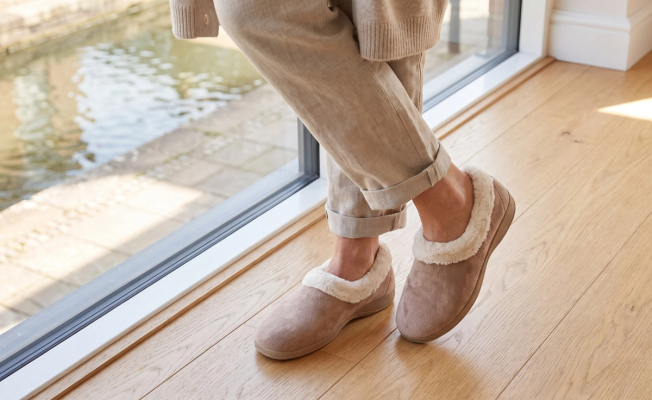
Soft uppers are recommended, too. Any hard upper material pressing on the joint is liable to cause pain and discomfort.
Browse our wide-fit shoes to explore your options.
Cushioned Insoles
Cushioning reduces the load on individual joints by distributing pressure more evenly across your foot. Memory foam insoles mould to the contours of your feet to spread pressure away from painful areas.
Shoes with cushioned insoles, or with removable ones that you can replace with cushioned alternatives, are recommended. You should still aim for stiff soles: cushioned insoles do not offset their contribution.

Flat or Low Heel
High heels shift your body weight forward, putting load directly on the painful areas of your feet, and should be avoided. Aiming for a low heel around 1- 2 cm is recommended over no heel at all, because it slightly reduces the demand on your MTP joint.
Browse our comfortable flat shoes to find a suitable pair.
Adjustable Closures / Customised Fit
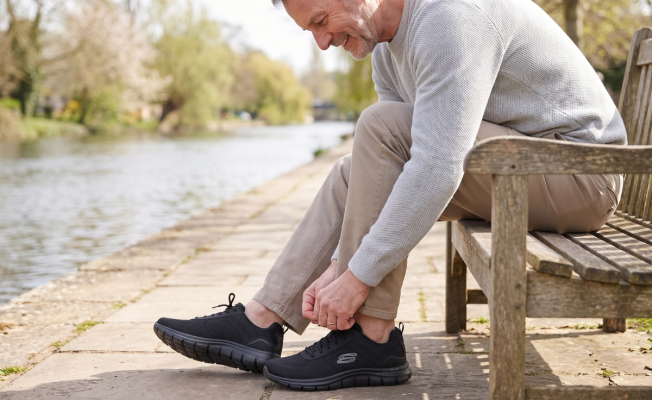
Laces, touch-fastenings or other adjustable mechanisms (or shoes) let you loosen your shoe over the affected joint, giving you the option to reduce friction and associated pain. This is great for tailoring your fit in real time - as your feet swell throughout the day, for example, or as you insert a custom orthotic.
Learning to lace your shoes in a way that skips eyelets over the MTP joint can reduce the pressure even more.
Lightweight & Breathable
Lightweight shoes reduce the effort required for each step, lowering fatigue and potentially offsetting additional effort you already require to walk in a way that is comfortable. Just remember: a rigid sole is a must, regardless of shoe weight!
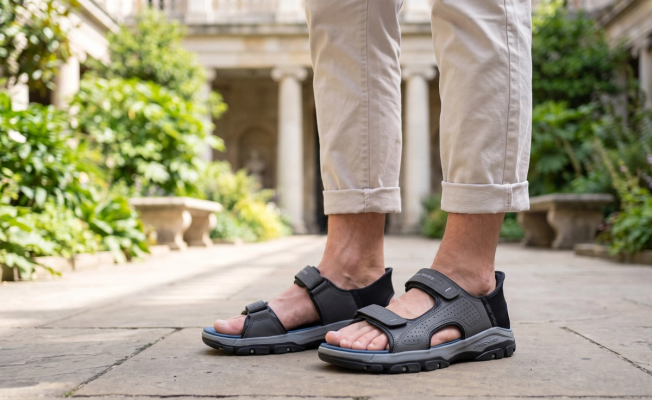
Breathable shoes keep your feet comfortable and can reduce irritation around a joint that’s already feeling sore.
Tips for Buying Shoes for Hallux Rigidus
Here are some top tips for buying shoes that will manage and alleviate your symptoms, rather than worsen them.
- Try before you buy! Make sure to shop at the end of the day when your feet are most swollen, and walk around the shop to get a feel for how they feel
- Test the bend: you want resistance when you try to bend the shoe at the forefoot
- Check the depth as well as the width: bony lumps are liable to rub on the top of the shoe, not the side, so the toe box should have depth
- Avoid shoes that need breaking in: they should be comfortable from the first wear
- Look for removable insoles to give you the option for custom orthotics in future
- Replace worn shoes: soles get softer over time and lose their supportive structure, which is a crucial property of shoes for Hallux Rigidus
The Right Shoes Can Bring Relief
The right footwear can make a real and meaningful difference to Hallux Rigidus symptoms, and it’s simpler than you might expect to find the right pair. We hope the tips in this guide have been useful and invite you to visit us in store or get in touch with our team if you’d like help finding shoes for your Hallux Rigidus.
Also note that if pain persists or worsens, or if it's impacting your mobility, we recommend speaking to a GP or podiatrist. Shoes can help, but there are limitations on what they can achieve, and it is best not to push beyond these.