
Water-Repellent vs Waterproof Shoes
4 December 2025
Choosing the right shoes for wet weather isn’t always as easy as you might expect. Many people assume water-repellent and waterproof shoes do the same job, then find out the hard way - when their feet are wet and uncomfortable - that the difference between them can dramatically affect the comfort and protection on offer. Understanding these distinctions helps you pick the right pair for school runs, dog walks, holidays, and everyday outdoor activities.
Knowing whether you need full waterproof protection or a lighter, water‑resistant option can also save you money and extend the life of your shoes. This guide explains how each type works, where they perform best, and how to decide which option truly suits your lifestyle.
Here’s what we’ll cover:
- What are water-repellent and waterproof shoes?
- What’s the difference between the two?
- A functional comparison
What Are Water-Repellent & Waterproof Shoes?
Water-repellent and waterproof shoes are both designed to help protect your feet from the elements, but they do so in noticeably different ways. Understanding the distinction is key to choosing the right footwear for everyday wear, unpredictable weather, and more demanding outdoor conditions. Whether you regularly brave the rain on your morning walk or simply want to keep your feet dry during the school run, the right level of water protection can make all the difference.
Water-repellent shoes are made using materials that resist water to a certain degree. They’re often treated with special coatings that make moisture bead on the surface rather than sink in. This is great for helping to keep your feet dry in light rain, mist, damp grass, or other specific environments. They are not designed to offer full protection against water ingress.
Waterproof shoes take things further. They’re constructed with sealed seams, waterproof membranes, and water-tight materials that offer a much higher level of protection, ensuring no water gets in, even during heavy rainfall or when walking through puddles. Or, if you’re really brave and have a high enough boot, a running stream.
In this guide, we’ll explore the difference between the two, how they perform in varying conditions, and how to decide which type is right for your needs.
The Difference Between the Two
Water-repellent and waterproof shoes sound similar, as we’ve established, but their performance in real-world conditions varies considerably. Below, we break down the key features that set them apart, helping you make a confident and informed choice.
Level of Protection
Water resistance exists on a spectrum. Water-repellent shoes handle light rain, dew, and brief splashes, but over time, moisture can - and will - seep through. Waterproof shoes offer complete protection, keeping water out even during downpours or across wet terrain. This difference can affect comfort and foot health, especially for those spending extended time outdoors.
Construction & Materials
The construction of a shoe plays a significant role in its performance. Water-repellent shoes typically use treated fabrics or leathers that resist moisture. Waterproof shoes go further with sealed seams, gusseted tongues, and breathable membranes like Gore-Tex, creating an impenetrable internal barrier against water. These technologies are similar to those found in high-performance hiking boots.
Breathability
Breathability matters because wet weather isn't always cold. Water-repellent shoes tend to offer better airflow, helping prevent overheating during warmer conditions. Waterproof shoes are also breathable, but the extra layers that keep water out can make them feel warmer. This extra insulation can be beneficial in colder conditions but may be less comfortable during hotter weather or long walks.
Durability in Wet Conditions
Both types of shoes perform well initially, but water-repellent coatings can wear off over time, especially with frequent exposure to wet grass or muddy paths. Waterproof shoes, however, are designed to withstand prolonged exposure to moisture and maintain their performance for much longer. If you're regularly in heavy rain or wet environments, waterproof footwear offers greater durability.
Best Use Scenarios
You should always consider your environment when choosing a shoe. Water-repellent shoes are great for everyday use - things like commuting, light walks, or handling light rain. Waterproof shoes are better suited for more demanding conditions, like hiking, dog walking, or outdoor work in areas with frequent rainfall. Matching your shoes to your needs ensures better comfort and practicality.
For particularly wet or muddy conditions — especially on farms, countryside walks, or festival fields — wellies offer the highest level of protection. They’re fully waterproof and designed for environments where even waterproof boots may struggle.
Comfort & Fit
Comfort depends on materials and design. Water-repellent shoes are usually softer and more flexible, making them great for all-day wear. Waterproof shoes may feel more structured but provide added stability and support, especially in challenging conditions like muddy terrain or uneven ground.
Weight
Waterproof shoes may have extra layers, adding a bit of weight, though the difference is often minimal. Water-repellent shoes are typically lighter, making them more suitable for everyday wear when full waterproofing isn’t needed.

Care & Maintenance
Both types of shoes require care to keep them performing at their best. Water-repellent shoes need more frequent reproofing, especially after prolonged exposure to wet conditions. Waterproof shoes are easier to maintain daily, but still benefit from occasional cleaning and conditioning to keep their protective features intact.
If you want to enhance the protection of your existing shoes, waterproofing sprays and conditioning treatments are an excellent option. They help restore or improve water resistance, especially on leather or fabric styles.
Comparison: When to Choose Water-Repellent vs Waterproof Shoes
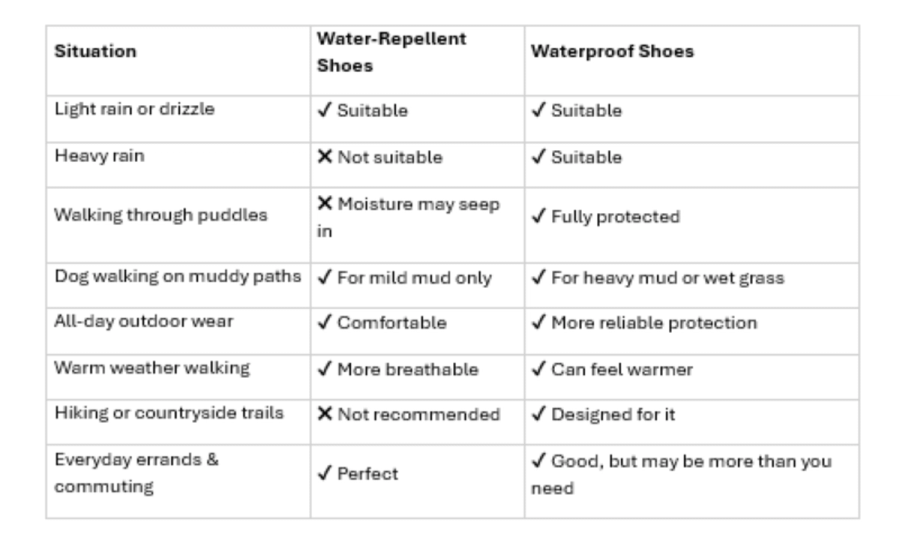
We’ve put together a handy table to give you at-a-glance information on which type of shoe is appropriate for a range of common scenarios. If you’re ever unsure whether your water-repellent shoes are up to the task or concerned that your waterproof boots might be a bit overengineered for the task at hand, refer to this table so you can step out into the world in confidence.
Explore Our Waterproof Collection and Visit Our Store for More Advice
Choosing between water-repellent and waterproof footwear ultimately depends on your lifestyle, local climate, and how much time you spend outdoors. If you want something light, breathable, and suited to occasional showers, water-repellent shoes may be all you need. But if you regularly face wet weather, muddy paths, or long rainy walks, waterproof shoes are the more practical and reliable investment.
We offer a wide selection of waterproof boots designed to keep your feet warm, dry, and comfortable whatever the weather. Explore our full range of boots to find your perfect pair.
And if you’re not sure which style best suits your needs, visit your nearest Pavers store. Our friendly in-store experts are always happy to offer personalised advice and help you find the right footwear for your adventures, errands, and everyday lifestyle.